

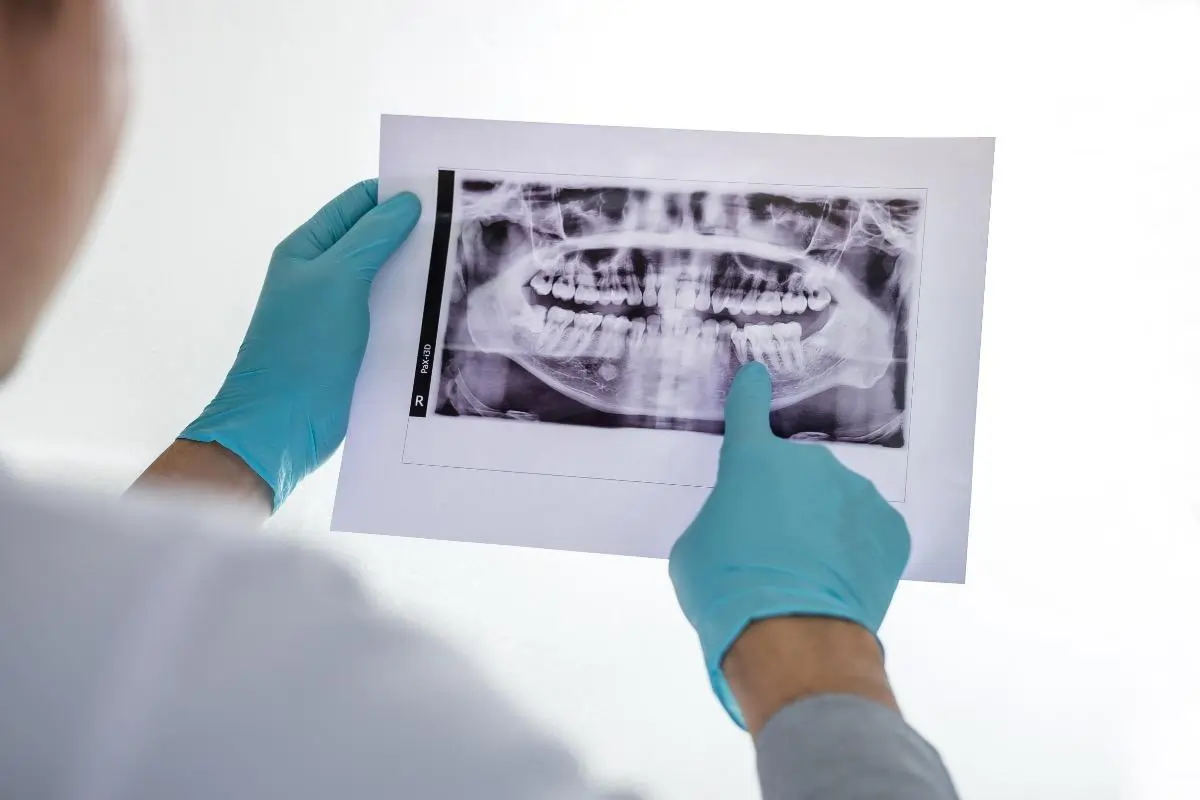
Dental radiographs, or dental X-rays, are integral to a comprehensive and ongoing oral health plan. Along with brushing and flossing and regular professional teeth cleanings, X-rays are essential. An oral examination can reveal a lot about your mouth’s health, but X-rays provide your dentist with a more comprehensive view by highlighting areas that are otherwise invisible, such as the spaces between and inside your teeth.
So why do some opt out of X-rays or feel hesitant about consenting? Why does the word radiation elicit a fear response? Well, probably because radiation is often associated with cancer and bombs. Whether we like it or not, we constantly surround ourselves with radiation, exposing ourselves to far higher levels in our daily lives than in the dentist’s chair.
Consider this statistic: Obtaining bitewing radiographs (two to four images of the back teeth) emits approximately 0.005 millisieverts (mSv) of radiation, while our daily environment exposes the average American to 3.2 mSV annually. Furthermore, a lead apron mitigating exposure protects your body (and organs) during dental X-rays.
The benefits of dental X-rays exceed the very low levels of radiation emitted.
What are the benefits of X-rays?
Dental radiographs can help your dentist see the following:
Cavities between your teeth
Infections underneath your gums
Certain types of tumors
Signs of periodontal disease
Changes in your hard tissue (teeth and bone) and soft tissue around your teeth and jaw bones
Early signs of problems that can become serious health issues (The earlier an issue is detected, the easier and more cost-effective it is to treat.)
How often should I have dental X-rays taken?
For most, dental X-rays aren’t taken that often. If you don’t have any underlying oral health problems, your dentist might only snap photos of your mouth every couple of years. Everyone’s oral health case is different, though. Your dentist will determine the best frequency based on an oral examination, health history, risk of oral disease, age, and any reported symptoms, among other factors.
So, to answer the question, “Should I have dental x-rays taken, and are they safe?” — yes and yes!